

Chinese automakers have long been putting pressure on Europeans not only with electric cars. Now the next step has come into play — so-called “new energy vehicles,” i.e., plug-in hybrids. The idea is simple: give the car a decent electric-only range while still keeping the option of using the familiar “burning” of fuel — the very thing Europe is trying to phase out gradually, but is still forced to tolerate for now.
What’s more interesting is something else: the Chinese are simultaneously demonstrating that they can build classic internal combustion engines — gasoline and diesel — and do so with high efficiency. And unlike many European brands, they don’t always rely on electrification to squeeze out fuel economy. As an example, they cite Dongfeng’s solutions: the focus is not so much on reducing consumption as on combating the heat losses typical of internal combustion engines.
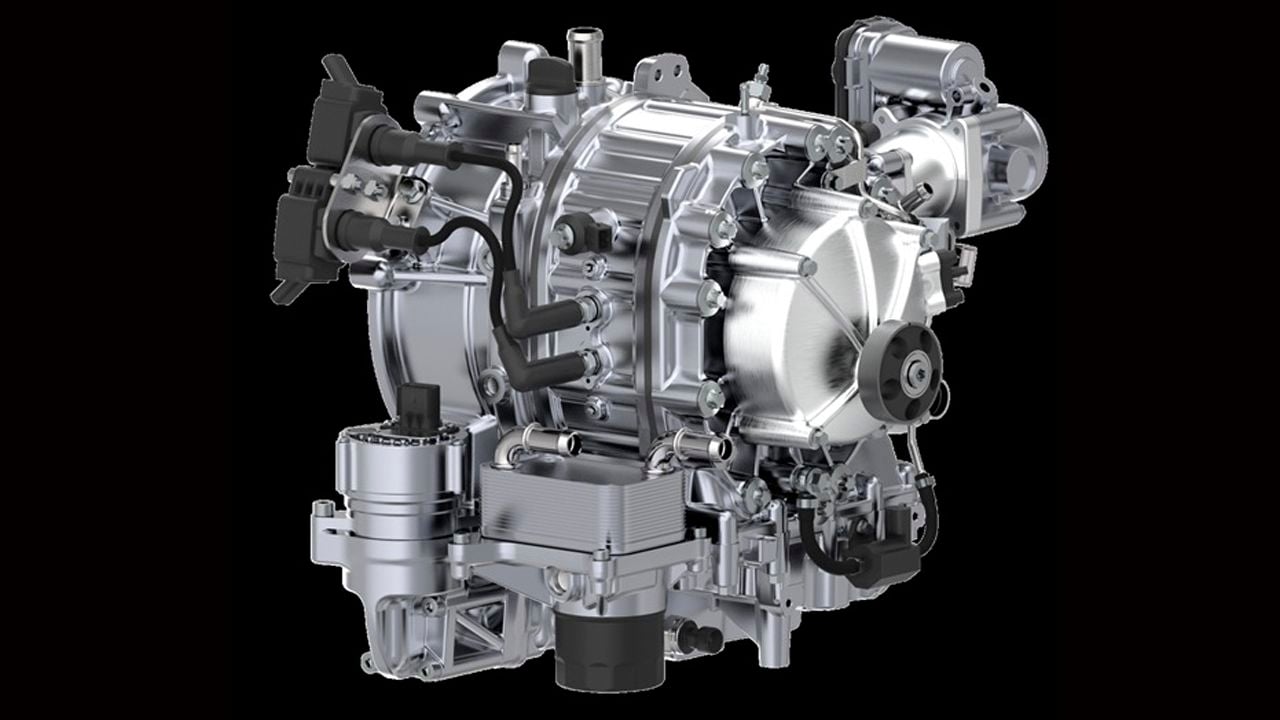
Changan, however, decided to take a different route and go beyond the familiar inline “fours” and “threes.” The new development is a Wankel rotary engine, a technology many remember from Mazda. The Japanese, by the way, have recent experience using a rotor as a generator and range extender on the Mazda MX-30.
Changan itself did not develop this engine directly: the project was handled by its subsidiary Harbin Dongan Auto Engine. The development was supported by the international engineering supplier AVL — it was the one involved in the modeling, design, and validation of the rotor, which received the R05E index.
The engine’s design is classic for the Wankel layout: a triangular rotor with curved faces, independent twin ignition, a lightweight eccentric shaft with a compensation system to reduce vibrations. An integrated “water jacket” is mentioned separately — the cooling circuit is built directly into the cast aluminum block, which saves space and stabilizes temperature, extending service life.
Displacement is just 0.5 liters. In the basic version, 53 hp is claimed, but at 6,500 rpm output can be brought up to 150 hp — depending on the application: for aircraft and drones operating below 1,000 meters, or for cars as an energy range extender. The design took eight months, the prototype’s first start took place on December 19, and testing has now begun. At Changan, they expect to bring the engine to production by 2027 — and judging by the pace, the goal looks quite realistic (source: motor.es).
