

Last weekend, a short 12-second clip went viral in the Chinese segment of social media, which many took to be a “leak.” It claimed that BYD’s premium sub-brand Yangwang was allegedly preparing a flying car called Ufly. What’s more, the video’s creators attributed to the new model support for BYD’s proprietary ultra-fast 1 MW charging.
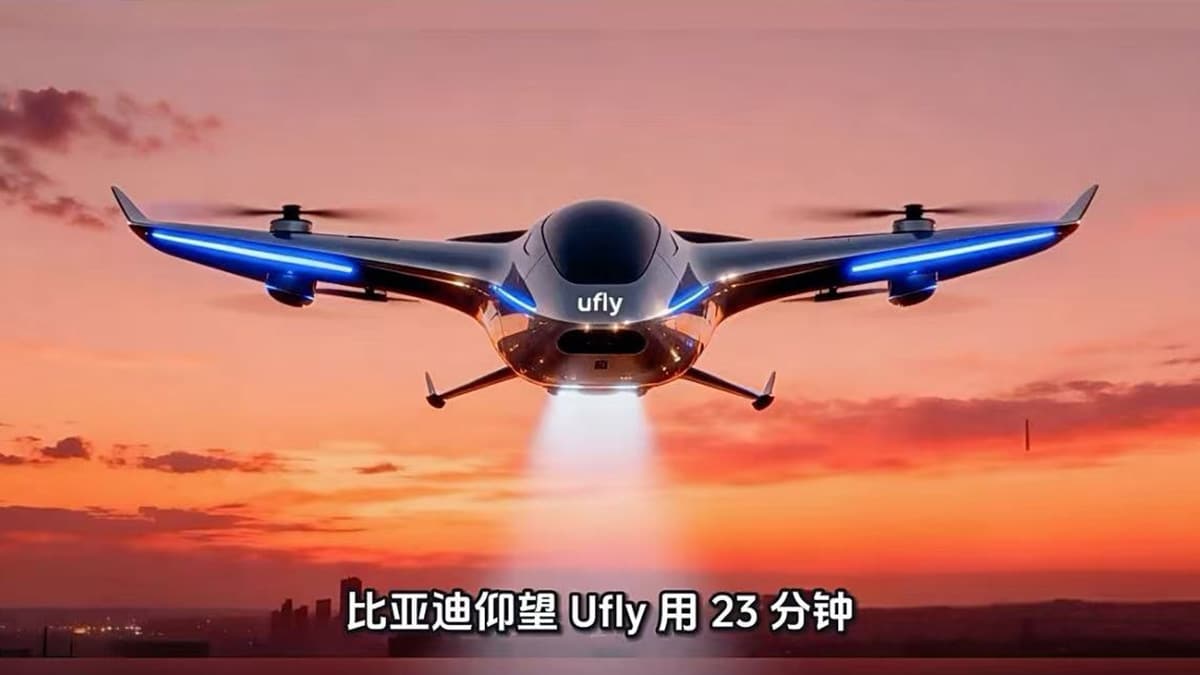
However, BYD itself was quick to cool the hype. Li Yunfei, the Chinese auto giant’s general manager for brand and PR, stated bluntly in a Weibo comment that the company has no plans or agreements to produce flying cars. He emphasized that in the pursuit of online traffic, it is worth maintaining restraint.
At the same time, alongside the clip, even louder claims appeared in a number of WeChat posts: that the Yangwang Ufly had already completed over-water flight tests and had even received an airworthiness certificate from the Civil Aviation Administration of China. The same posts cited a “demonstration” in July: a 136 km flight from Zhuhai to Shenzhen in 23 minutes. In practice, such stories look dubious at least because BYD has never officially announced such a project, and certification of aircraft typically takes a long time.
That said, the eVTOL market in China is indeed gaining momentum. According to the China Low-Altitude Economy Alliance (report for November 2024), by 2030 up to 100,000 electric vertical takeoff and landing aircraft could appear in the country, including “air taxis” and private-use vehicles. Other automakers are already entering this niche: Xpeng, via its subsidiary Aridge, has launched a plant in Guangzhou for mass production of a modular flying car by 2026. Chery, GAC, Changan, and FAW are developing their own projects, and JAC recently opened a dedicated laboratory. Aridge’s lineup, in particular, mentions the six-seat A868, designed for long-distance trips with several passengers (source: cnevpost.com).
