

Avatr 12 bets not only on striking looks, but also on a set of technologies that in real life may prove more useful than design. For example, the EV has received an automatic parking system capable of working in two scenarios: when the driver remains in the cabin and when they control the process remotely from outside. This mode is designed for tight spaces where opening the doors or pulling out “manually” can be problematic.
Special attention should be paid to the intelligent all-wheel drive: torque is redistributed between the axles very quickly — in 10 milliseconds. In theory, this helps save energy, use the brakes less often, and, when necessary, provide confident acceleration and stability:
- auto parking in standard and remote modes;
- fast all-wheel-drive operation (10 ms);
- a wide range of electronic assistants and safety systems.
Suspension: air with a “demo” mode or classic
The model’s arsenal includes an air suspension with four active modes and a separate demonstration scenario. The latter is not designed for driving, but for easier entry and exit. The ground-clearance adjustment range is 45 mm. At the same time, for those who don’t trust “air,” a version with conventional springs is provided:
- air suspension: 4 modes + a mode for entry/exit;
- 45 mm ride-height adjustment;
- an alternative — a spring-suspension version.
Interior: voice instead of extra taps and “grown-up” screens
Inside, the Avatr 12 continues the theme of smooth shapes and a “futuristic” mood. The door opens automatically with a single press. The materials and fit of the elements give the impression of a solid premium product, and the ergonomics are thought out so that important things aren’t buried deep in menus.
The controls are implemented in an interesting way: physical buttons were kept for what you need all the time — window switches, hazard lights, and so on. The climate control is placed in a separate block, while functions like massage are in the central screen interface. At the same time, the touchscreen, as intended, can be used less often thanks to voice control: the system understands Russian speech quite well, can open the trunk, turn on the air conditioning, and set up the music. The microphones recognize where the command is coming from and can, for example, lower the window next to a specific passenger.
Displays and a new type of “mirrors”
Up front there is a wide 35.5-inch screen along the lower edge of the windshield with key indicators. In the center is a 15.6-inch multimedia display. In the top version, cameras are offered instead of the usual side mirrors, and the image is shown on screens located under the windshield roughly in the driver’s usual line of sight — getting used to it, it is claimed, doesn’t take much time. The steering wheel is oval with flattened edges — a design reference to sports machinery. Equipment features:
- 35.5-inch display in front of the driver;
- 15.6-inch central multimedia screen;
- cameras instead of mirrors (in the top trim) with the image displayed on separate screens;
- Russian-language voice interface with command-source detection.
EV practicality: two trunks and comfort for everyone
Since the EV’s power modules are located on the axles, an additional compartment for items is arranged under the hood — 65 liters. The main trunk at the rear is noticeably more spacious: 425 liters. If you need to carry something large, the second row folds down, turning the cabin into cargo space.
Avatr 12 doesn’t skimp on seat equipment: massage, heating, and ventilation are provided for all seats. However, the most relaxed “zero gravity” mode is available only up front — rear passengers don’t get that scenario.
Exterior: a bet on biodesign and unusual solutions
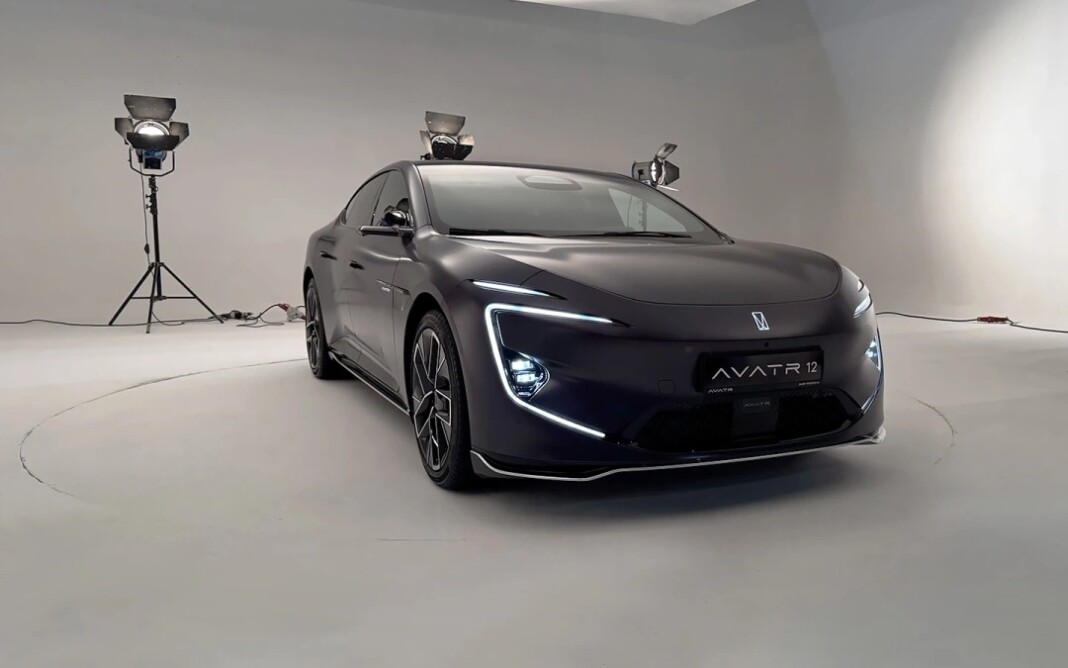
Avatr 12 has officially entered the Russian market and is aimed at the premium segment. The exterior is built on “biological” lines: an elongated silhouette, soft shapes, a long hood, while the image is both strict and aggressive at the same time. In the details — narrow lighting, LED strips, compact mirror stalks instead of mirrors, as well as decorative elements with metallic accents.
One of the most discussed solutions is the windshield, which visually flows into the roof. It looks impressive, although the question of practicality suggests itself. Brand representatives, however, assure that the sloping shape reduces the risk of serious damage, and if desired the roof can be additionally protected.
At the rear there is no conventional glass: visibility is provided by a camera, and the image is displayed on the interior mirror. An important detail for bad weather is that the camera has a washer. The look is completed by a spoiler on the trunk lid (photo: autonews.ru).
